

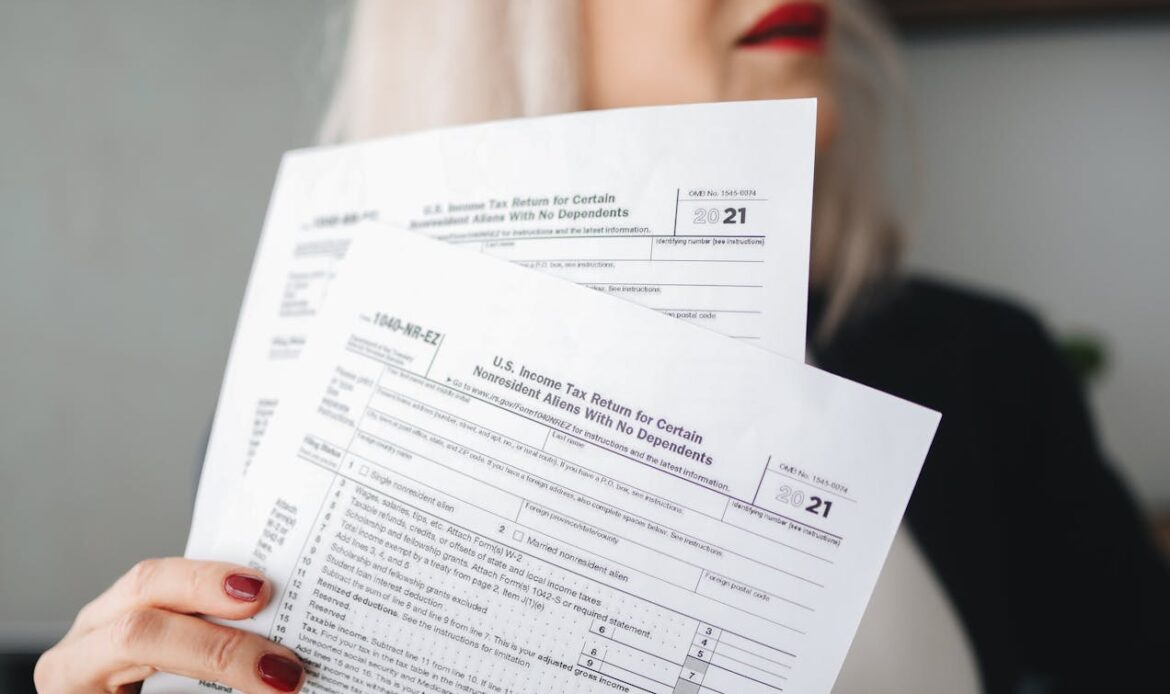
How to Claim US-India Tax Treaty Benefits on Form 1040-NR
Claiming treaty benefits on Form 1040-NR is not automatic; it is an elective position you must disclose to the IRS. For the 2025 filing season, the IRS has streamlined the process, but missing a single checkbox can lead to the “disallowance” of your deduction and a surprise tax bill.
Step 1: Identifying the “Effective” Income
Before touching the forms, separate your income into two buckets:
- Effectively Connected Income (ECI): Your U.S. wages (W-2), CPT/OPT earnings, or business income. This is reported on Page 1 of Form 1040-NR.
- Fixed, Determinable, Annual, Periodical (FDAP): Passive income like U.S. dividends or interest. This is reported on Schedule NEC.
Step 2: Filling Out Schedule OI (Other Information)
Schedule OI is mandatory for anyone claiming a treaty. This is where you tell the IRS why you are paying less tax.
- Item L: This is the “Treaty Section.”
- L(1)(a): Enter “India.”
- L(1)(b): Enter the specific Treaty Article (e.g., “21(2)” for the Standard Deduction or “22” for Researchers).
- L(1)(c): Enter the amount of income exempt from tax.
- Note: For Article 21(2), you aren’t usually exempting income; you are taking a deduction. Often, you will enter $0 here but still cite the article to justify the deduction on the main form.
Step 3: Applying the Article 21(2) Standard Deduction
If you are an Indian student claiming the $15,750 standard deduction (for tax year 2025) or $16,100 (for 2025):
- Go to Form 1040-NR, Line 12.
- Normally, this line is for itemized deductions from Schedule A. However, for Indian students, the instructions explicitly allow you to enter the Standard Deduction here.
- Crucial: Write “Standard Deduction allowed under U.S.-India Income Tax Treaty” in the margin or the space provided to prevent automated IRS rejection.
Step 4: Reporting Exempt Income (1042-S)
If you received a Form 1042-S from your university showing exempt scholarship or teaching income (Article 22):
- Do not include this amount in the “Income” section on Page 1.
- Instead, report it only on Schedule OI, Item L. This ensures the IRS knows you received the money but that it is legally non-taxable.
Step 5: Do You Need Form 8833?
Form 8833 (Treaty-Based Return Position Disclosure) is required if your treaty claim “overrides” a Internal Revenue Code (IRC) provision.
- Students (Art 21): Usually not required, as the treaty benefit is well-established and disclosed on Schedule OI.
- Researchers/Scholars (Art 22): Often not required for standard university pay.
- Exceptions: If you are claiming a benefit that is unusual or exceeds $100,000 in exempt income, you must attach Form 8833 to avoid a $1,000 penalty.
How KKCA Secures Your Status
The IRS uses automated matching to compare your W-2/1042-S with your 1040-NR. We ensure a perfect match:
- Audit-Proofing Schedule OI: We provide the exact technical language required in Item L to satisfy IRS processing centers.
- State-Federal Reconciliation: We ensure that while your federal tax is reduced by the treaty, your state return (which likely doesn’t recognize the treaty) remains compliant to avoid state-level penalties.
- FICA Refund Coordination: If you are claiming a treaty for income tax but are also due a FICA refund, we bundle your Form 843 to ensure all your overpaid taxes are recovered in one cycle.
Call to Action
Looking for personalized tax services about your specific tax situation? Please contact us. We are here to help you with your specific tax matters.
Frequently Asked Questions (FAQ)
Q: Can I e-file Form 1040-NR with treaty benefits? A: Yes, most professional software allows e-filing for 1040-NR. However, you must ensure the software correctly populates Schedule OI.
Q: What if I have two different treaty claims? A: You must list them separately in Item L of Schedule OI. For example, use one line for Article 21 (Student) and another if you have Article 10 (Dividends) income.
Q: Does claiming the treaty affect my H1B or Green Card application? A: No. Claiming a legal tax treaty benefit is not considered “public charge” and does not negatively impact your immigration status.
Disclaimer
This blog is intended for informational purposes only and does not constitute legal or tax advice. Please consult a qualified U.S. CPA or tax attorney for guidance specific to your situation.